
Our SEO Process for Structured Search Growth
Filipino SEO Expert follows a structured SEO process designed to turn search visibility into measurable business growth. Our work aligns technical SEO, content development, internal linking, conversion alignment, and ongoing refinement inside one connected system. This page explains how we work, how decisions are made, and how each phase supports long term search performance.
We do not rely on disconnected tasks or reactive changes. We use a clear SEO process that starts with technical clarity, expands through strategic content and authority building, and improves through measurement over time. This structure helps businesses grow with more consistency, better prioritization, and stronger alignment between traffic, user intent, and business goals.
What Is an SEO Process
An SEO process is a structured system used to improve how a website is discovered, understood, and ranked by search engines. A strong SEO process includes technical optimization, keyword strategy, content development, on page improvements, internal linking, and ongoing performance analysis. The purpose is not simply to increase traffic. The purpose is to create sustainable visibility that supports meaningful business outcomes.
A clear SEO methodology makes execution more consistent. Instead of publishing pages without a framework or making updates without direction, a structured process creates priorities, timelines, and measurable checkpoints. This makes search growth easier to scale because each action supports a broader strategy rather than standing alone.
At Filipino SEO Expert, our SEO process is built around clarity, structure, and measurable improvement. We focus on building a strong foundation first, then expanding authority through content and optimization, then refining the system based on real performance data.
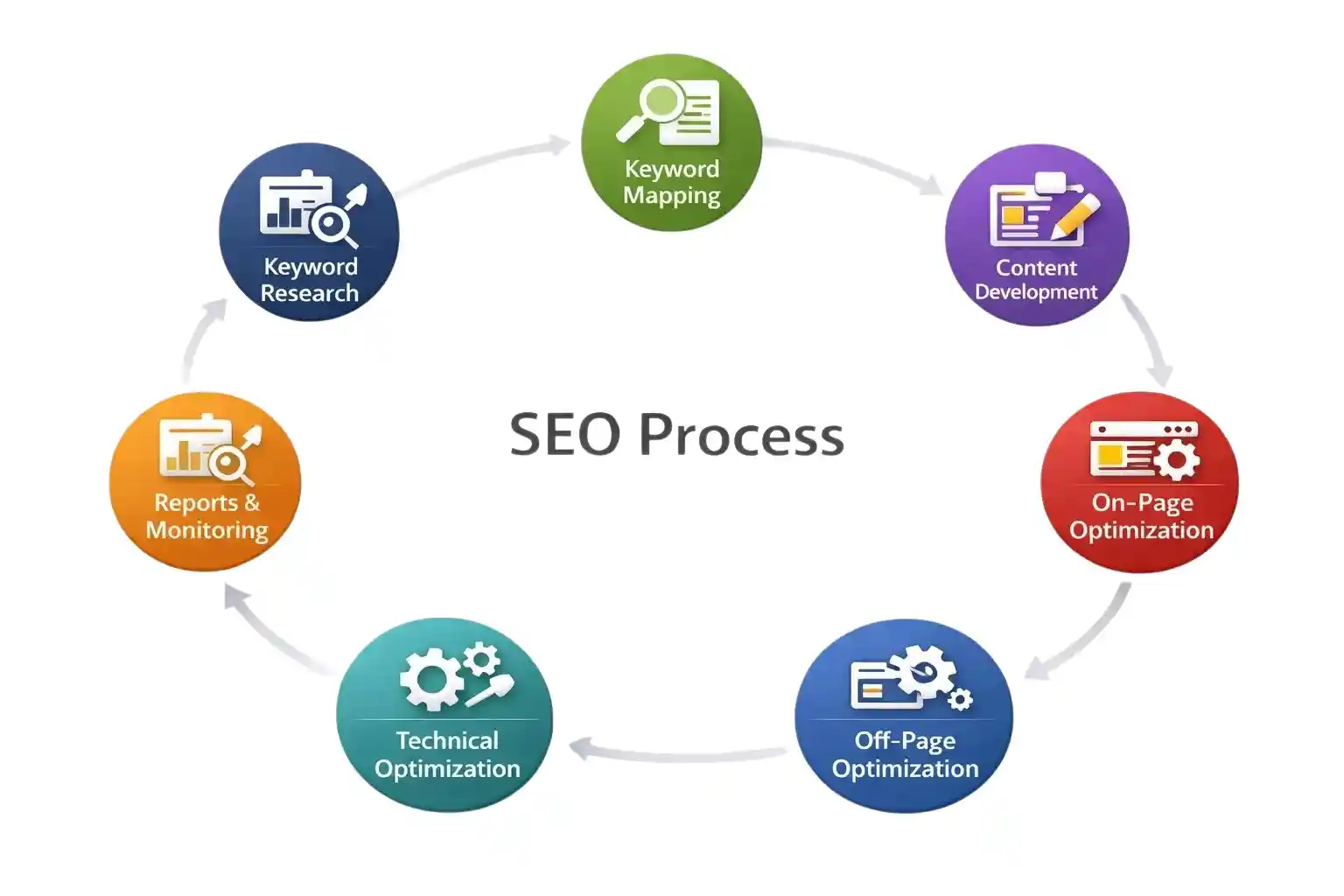
Why Structure Matters in the SEO Process
SEO becomes inefficient when execution is fragmented. Technical issues can limit discoverability. Weak content structure can reduce relevance. Poor internal linking can prevent authority from flowing across important pages. Missing measurement can make it difficult to know what is working and what should be improved. A structured SEO process solves these issues by giving every stage a clear purpose inside one connected system.
Structure also improves communication and decision making. Businesses need to understand what is being prioritized, why it matters, and how it supports future growth. A documented SEO workflow reduces guesswork, improves accountability, and creates a more stable path for long term visibility.
Our SEO Process Framework
Our SEO process framework is built on four connected layers. Each layer strengthens the next, allowing search visibility to grow through structure rather than isolated activity.
Technical Foundation
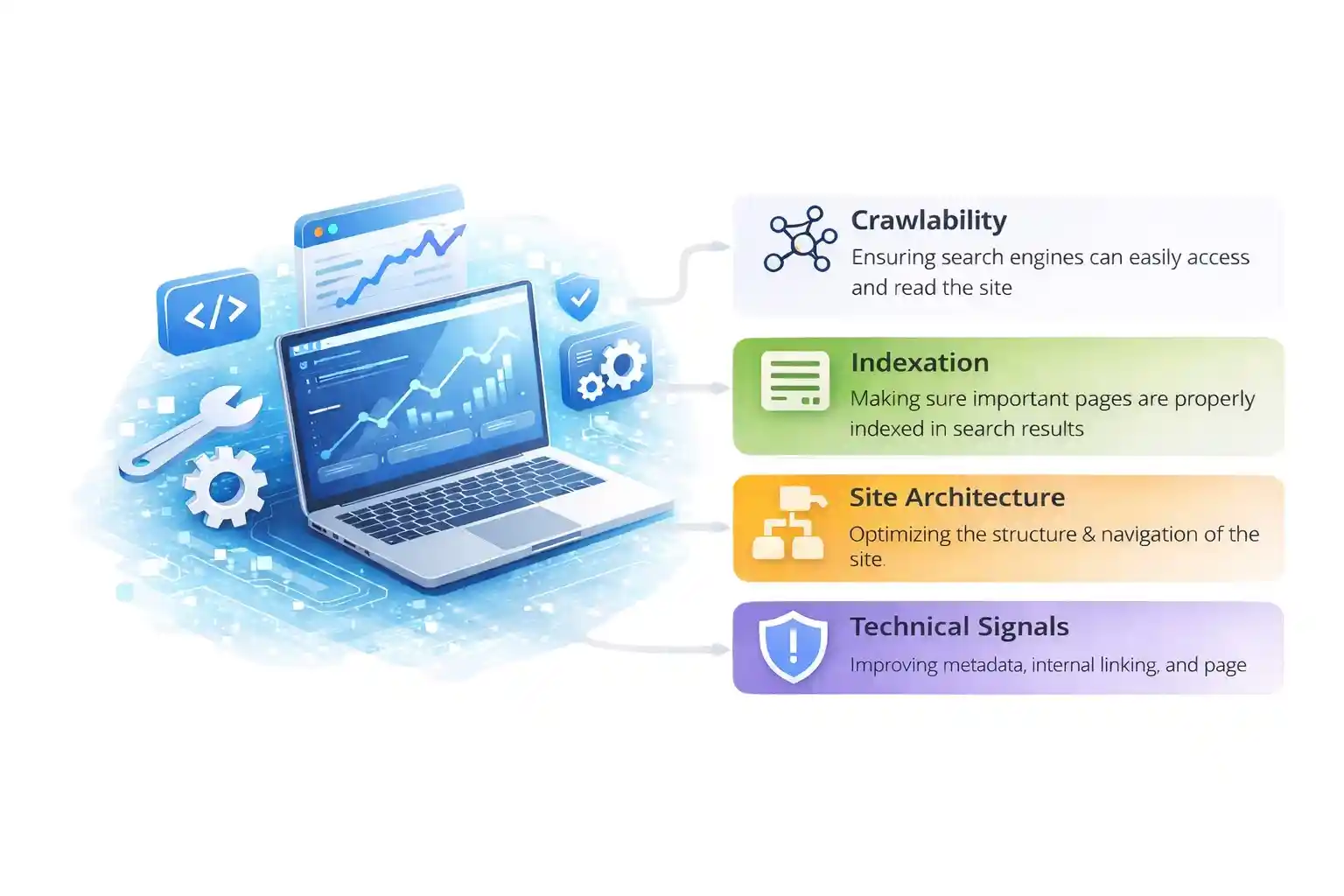
Every effective SEO process begins with technical clarity. Before scaling content or targeting broader keyword themes, we make sure search engines can properly crawl, index, and interpret the site. Technical issues often limit performance long before content strategy has a chance to succeed.
Our technical work focuses on crawlability, indexation, site architecture, page experience, structured data, and internal technical signals that affect discoverability. We review how the site is built, how pages are connected, and whether search engines can process the site efficiently.
This stage may include crawl path analysis, indexation review, canonical checks, metadata structure assessment, internal link evaluation, and page level quality improvements. The goal is to remove structural friction and strengthen the base that supports every future optimization.
Learn more about this inside our Technical SEO page
Authority and Content Development
Once the foundation is stable, the next layer of the SEO process focuses on authority and relevance. Search engines reward websites that demonstrate topical depth, clear intent alignment, and useful page relationships.
We map keywords to intent, define content roles, improve page structure, and build internal relationships between core pages and supporting pages. Instead of treating each page as a separate asset, we build a connected content system that reinforces the larger topic area.
Authority development includes content planning, content refinement, semantic reinforcement, internal linking logic, and clearer alignment between what users search for and what the business offers.
Explore how we implement this inside Content and Authority SEO

Conversion and Measurement

Traffic alone is not the goal. A strong SEO process also needs to support action. That means the user journey, content structure, and conversion pathways must be clear. If visibility grows but users do not have a logical next step, the system becomes inefficient.
Our SEO workflow includes conversion alignment and measurement planning so traffic quality can be evaluated alongside visibility growth. We review page intent, calls to action, user flow, and performance tracking so we can measure what is actually happening after traffic arrives.
This stage includes analytics alignment, goal tracking, conversion pathway review, CTA clarity, and reporting logic that helps connect SEO activity with business outcomes.
See how this is structured inside Conversion Tracking and Analytics
Continuous Optimization
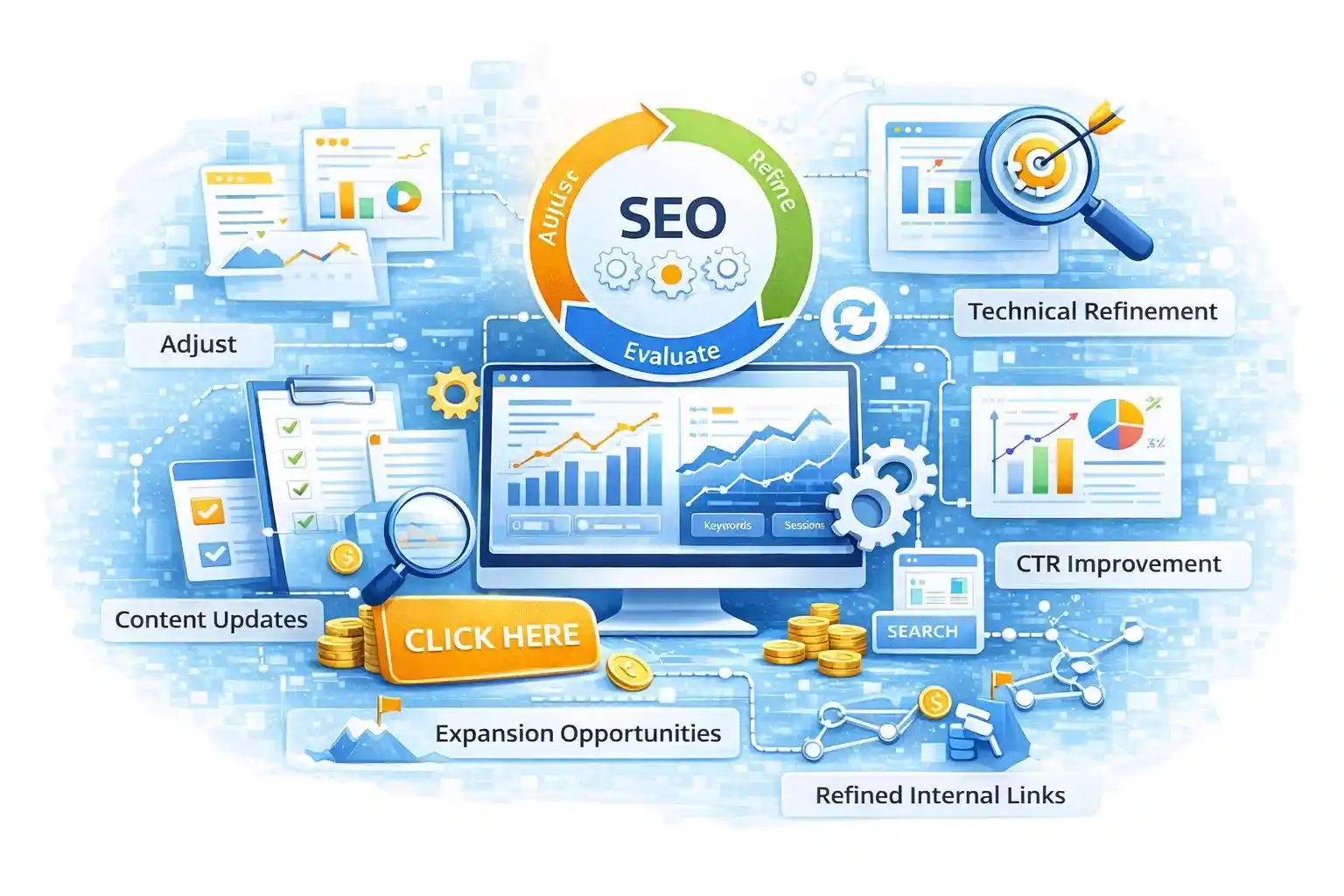
SEO is not a one time project. Search behavior changes, competitors publish new content, technical conditions evolve, and performance signals shift over time. That is why the final layer of our SEO process is continuous optimization.
We monitor performance, review opportunities, refine existing assets, and expand into new areas when the data supports it. This stage helps preserve momentum while improving efficiency.
Continuous optimization may include content updates, internal linking improvements, technical refinement, search intent adjustment, CTR improvement work, and expansion into validated keyword opportunities.
To understand this refinement cycle further, review Process and Methodology
SEO Process Steps Explained
The SEO process steps we follow are structured to create a repeatable workflow that supports long term growth. Each step builds on the previous one, which is why order matters.
Discovery and Initial Assessment
We begin by understanding the business, current site condition, search landscape, and existing opportunities. This includes reviewing the website, identifying major structural issues, clarifying goals, and understanding the role of search within the wider growth model.
Technical Audit and Foundation Setup
We identify technical blockers that affect crawlability, indexation, architecture, usability, and page quality. We then prioritize foundational fixes so search engines can process the site more effectively before expansion begins.
Keyword Research and Strategy Mapping
We analyze search demand, intent patterns, topic relationships, and commercial relevance. This step helps define what pages should exist, what each page should target, and how those pages should work together inside a larger SEO strategy.
Content and On Page Optimization
We create new content or improve existing content based on keyword intent, structure, relevance, and usability. We also optimize headings, page flow, metadata, internal links, and supporting elements that improve clarity for both users and search engines.
Internal Linking and Authority Reinforcement
We strengthen page relationships through strategic internal linking and clearer topic pathways. This helps search engines understand page hierarchy while also improving navigation and authority distribution across the site.
Measurement, Review, and Refinement
We track results, evaluate changes, identify new opportunities, and improve the system based on measurable signals. This is what makes the SEO execution process sustainable.
How Our SEO Workflow Works in Practice
Our SEO workflow is designed to keep execution connected from start to finish. Technical work informs content decisions. Content structure supports internal linking. Internal linking supports authority growth. Measurement shows which areas deserve further refinement. Each phase contributes to the next.
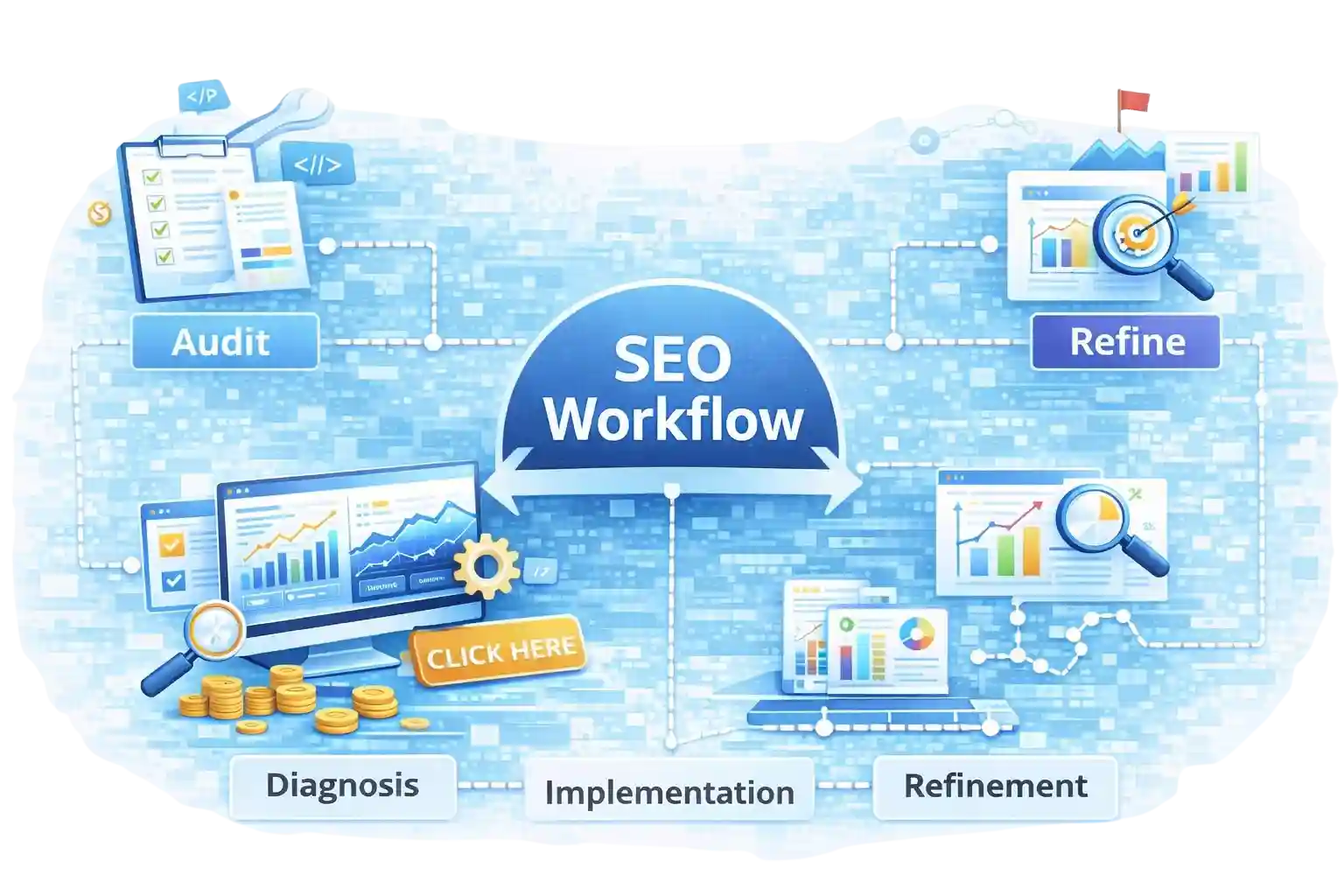
In practice, this means we do not treat audits, content updates, and reporting as separate activities with no strategic relationship. We build a coordinated workflow where each recommendation has a role inside the broader system. This improves efficiency because the work is sequenced logically.
It also improves transparency. Businesses can see how the work moves from diagnosis to implementation to refinement. That clarity matters because a strong SEO workflow should be understandable, measurable, and repeatable.
Why Our SEO Methodology Is Data Driven
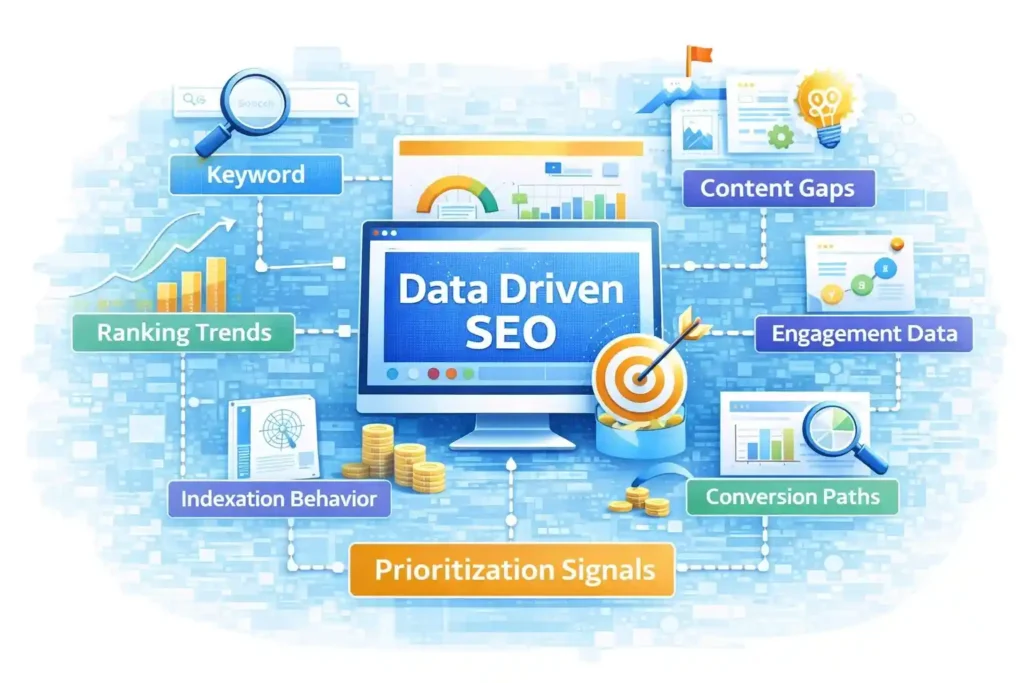
Our SEO methodology is data driven because prioritization matters. Not every issue deserves the same level of urgency. Not every keyword opportunity is equally valuable. Not every content update will create the same level of impact. A data driven SEO process helps separate meaningful priorities from low value activity.
We use measurable signals to guide direction. That includes search demand, indexation behavior, performance trends, content gaps, page level engagement, conversion pathways, and broader visibility patterns. These signals help us decide where to focus first and what type of improvement is most likely to create progress.
Data does not replace strategy. It improves strategy. It helps us validate assumptions, reduce wasted effort, and keep execution aligned with results.
Industries and Use Cases
Our SEO process can be applied across different industries while still maintaining a consistent framework.

SaaS Companies

Startups Companies

AI
Companies

Health Tech Companies

FinTech Companies

Booking Systems

Local Businesses

SEO Agencies Partners
Testimonials
Our clients value structured strategy, technical clarity, and measurable growth. Below are insights from companies that have partnered with us to strengthen their search visibility.
James Moore
Allie Gross
Dianne Rod
Frequently Asked Questions About SEO Process
An SEO process is a structured system for improving search visibility through technical optimization, content development, internal linking, and continuous refinement.
An SEO process usually takes several months to show meaningful movement, while stronger authority and broader growth tend to compound over a longer period.
The main SEO process steps include discovery, technical audit, keyword strategy, content optimization, internal linking, tracking, and ongoing refinement.
SEO is a continuous process because search behavior, competition, site conditions, and performance signals change over time. Ongoing improvement is necessary to maintain and grow visibility.
SEO is a continuous process because search behavior, competition, site conditions, and performance signals change over time. Ongoing improvement is necessary to maintain and grow visibility.
Build a Structured SEO Process That Scales
If you are looking for a structured SEO process that supports long term visibility and measurable growth, Filipino SEO Expert is ready to build a connected search system around your goals. Our approach is designed to create clarity, strengthen authority, improve discoverability, and align organic growth with real business outcomes.
Search Growth Insights
Receive structured insights on SEO strategy, Google Ads performance, and scalable search systems. No spam. Only actionable updates.